

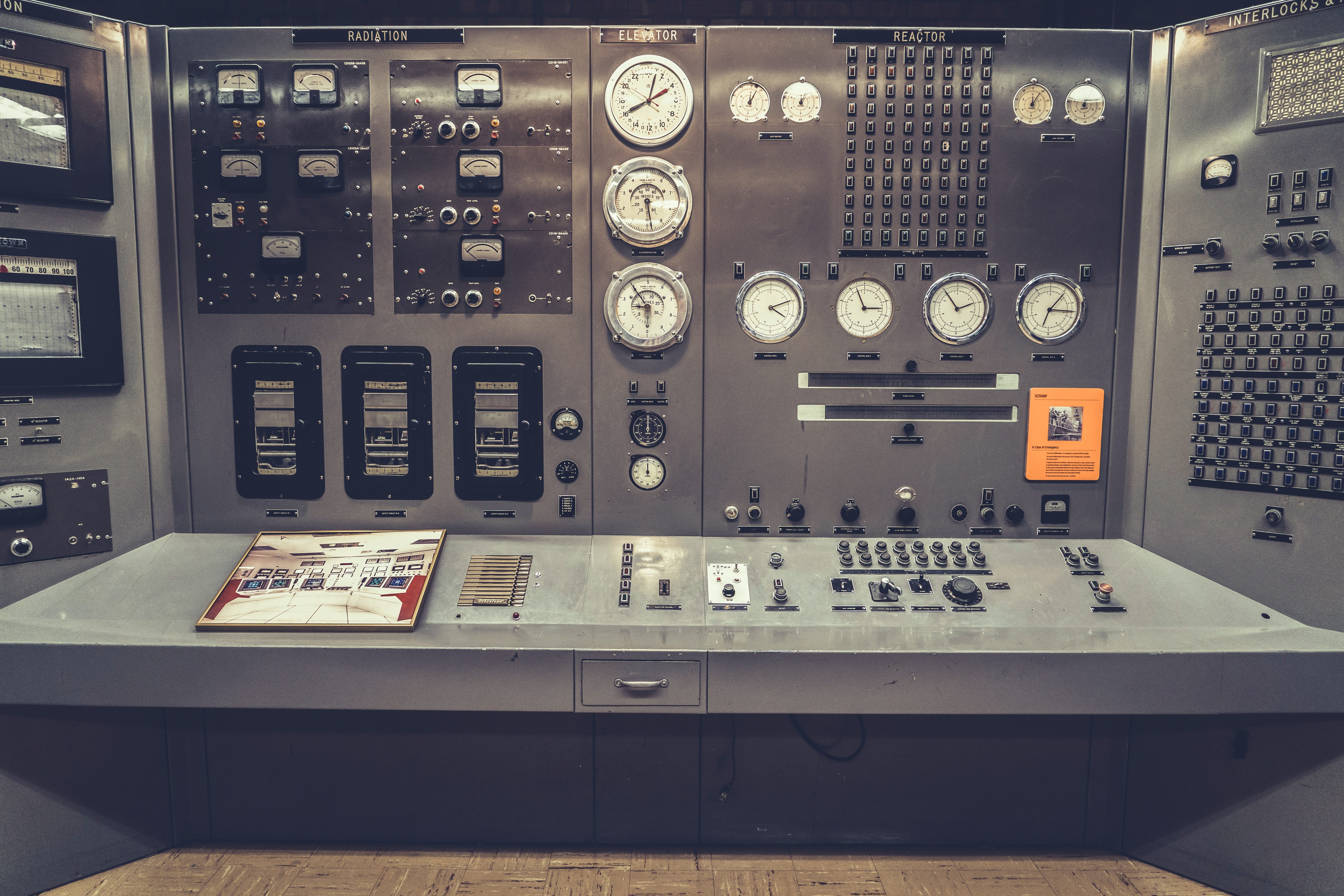
Nuclear reactor technology is a complex and ever-evolving field. Reactors are an integral part of processes involving the generation of electricity, the production of medical isotopes, and conducting research. The technology has the potential to provide a clean and sustainable source of energy.
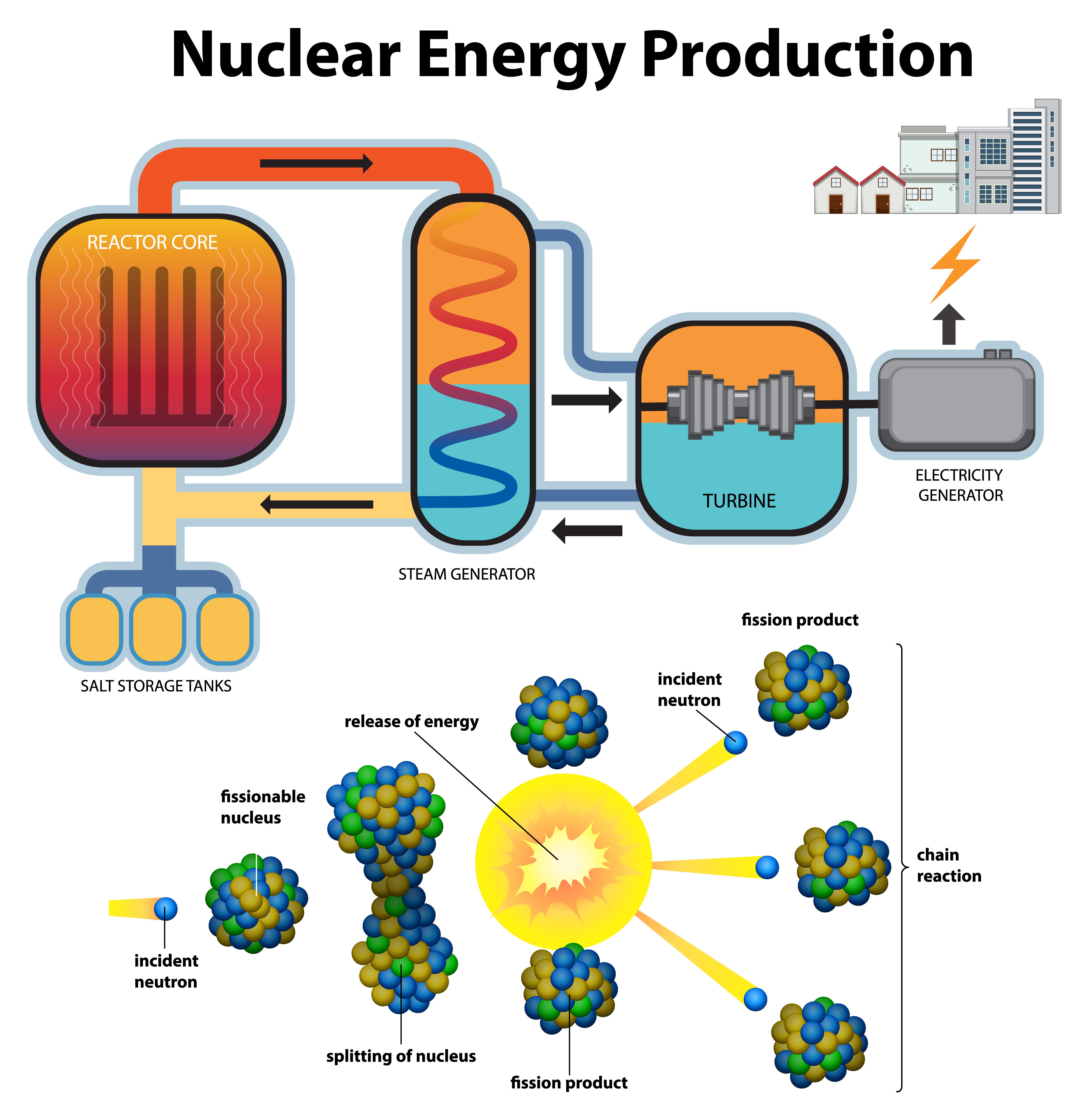
Nuclear reactors are devices that use heat from nuclear fission to generate electricity. Nuclear fission is a process in which the nucleus of an atom is split, releasing a large amount of energy. This energy is then used to heat water, which turns into steam and drives a turbine to generate electricity.
NB: Nuclear Fusion will be covered in the next article.
Nuclear reactors come in a variety of shapes and sizes, but they all operate on the same basic concept. The most common type of nuclear reactor is the light water reactor (LWR). LWRs use ordinary water as both a coolant and a moderator. The moderator slows down the neutrons released during fission, which increases the chances of more fissions occurring. This creates a chain reaction that releases a large amount of energy.
Other types of nuclear reactors include heavy water reactors (HWRs), gas-cooled reactors (GCRs), and fast neutron reactors (FNRs). HWRs use heavy water as a moderator, which slows down neutrons more effectively than ordinary water. GCRs use a gas, such as carbon dioxide or helium, as a coolant. FNRs do not use a moderator, which allows them to operate at higher temperatures and pressures.
The latest nuclear reactor technology is the small modular reactor (SMR). SMRs are smaller and less expensive than traditional nuclear reactors. They are also easier to build and maintain. SMRs are expected to play a major role in the future of nuclear power, as they can be used to generate electricity in remote areas or to provide backup power for grid systems.
The future of nuclear reactor technology is promising. New designs are being developed that are safer, more efficient, and less expensive than traditional nuclear reactors. These new reactors have the potential to provide a clean, reliable, and affordable source of energy for the world.
A more detailed description of the construction and operating principle of each type of nuclear reactor:
Light Water Reactors (LWRs)
LWRs are the most common type of nuclear reactor. They use ordinary water as both a coolant and a moderator. The coolant circulates through the reactor core, absorbing heat from the fission products. The hot coolant then passes through a heat exchanger, where it transfers heat to water that is turned into steam. The steam then drives a turbine to generate electricity.
LWRs are relatively simple to build and operate. They are also relatively efficient, with a thermal efficiency of about 33%. However, they are not as safe as some other types of nuclear reactors. In the event of a meltdown, the coolant could boil away, which would expose the fuel rods to air and cause them to catch fire.
Heavy Water Reactors (HWRs)
HWRs use heavy water as a moderator. Heavy water is a form of water that contains two hydrogen atoms and one oxygen atom. The extra neutron in the heavy hydrogen atoms slows down neutrons more effectively than ordinary water, which increases the chances of more fissions occurring. This creates a chain reaction that releases a large amount of energy.
HWRs are more efficient than LWRs, with a thermal efficiency of about 40%. They are also safer than LWRs, as the coolant is less likely to boil away in the event of a meltdown. However, HWRs are more expensive to build and operate than LWRs.
Gas-Cooled Reactors (GCRs)
GCRs use a gas, such as carbon dioxide or helium, as a coolant. The coolant circulates through the reactor core, absorbing heat from the fission products. The hot coolant then passes through a heat exchanger, where it transfers heat to water that is turned into steam. The steam then drives a turbine to generate electricity.
GCRs are more efficient than LWRs, with a thermal efficiency of about 45%. They are also safer than LWRs, as the coolant is less likely to boil away in the event of a meltdown. However, GCRs are more expensive to build and operate than LWRs.
Fast Neutron Reactors (FNRs)
FNRs do not use a moderator. This allows them to operate at higher temperatures and pressures. FNRs are also more efficient than LWRs, with a thermal efficiency of about 50%. However, FNRs are more expensive to build and operate than LWRs.
FNRs have the potential to be used to breed fissile material, such as plutonium. Plutonium can be used to fuel other nuclear reactors or create nuclear weapons. As a result, FNRs are subject to strict international safeguards.
The future of nuclear reactor technology is bright. New designs underdevelopment are safer, more efficient, and less expensive than traditional nuclear reactors. These new reactors have the potential to provide a clean, reliable, and affordable source of energy for the world. ~ Xolani Ndlovu